An Stad, 30 Frederick St. North
Place name: An Stad
File number: DS743
Eircode: Dublin 1
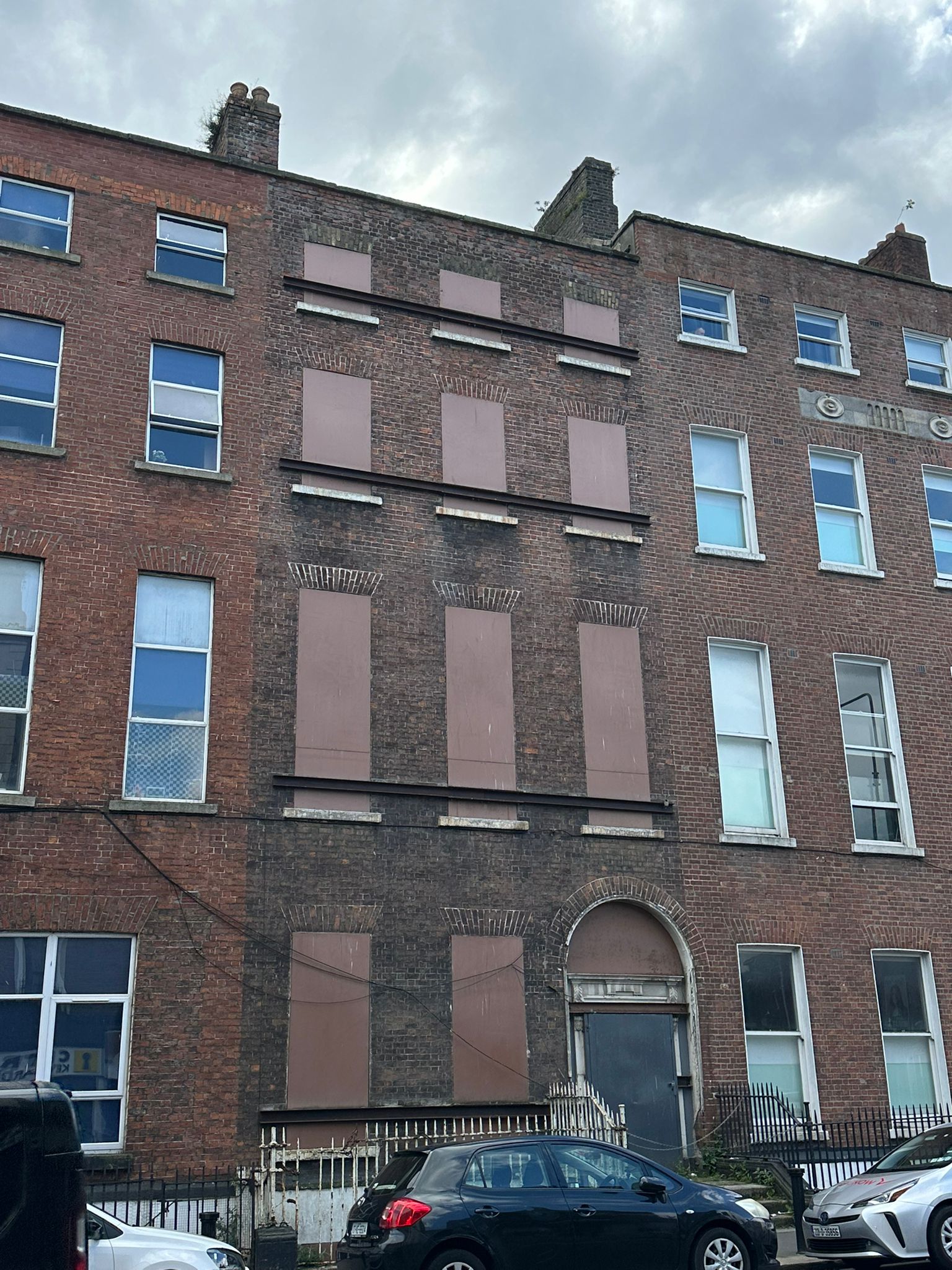
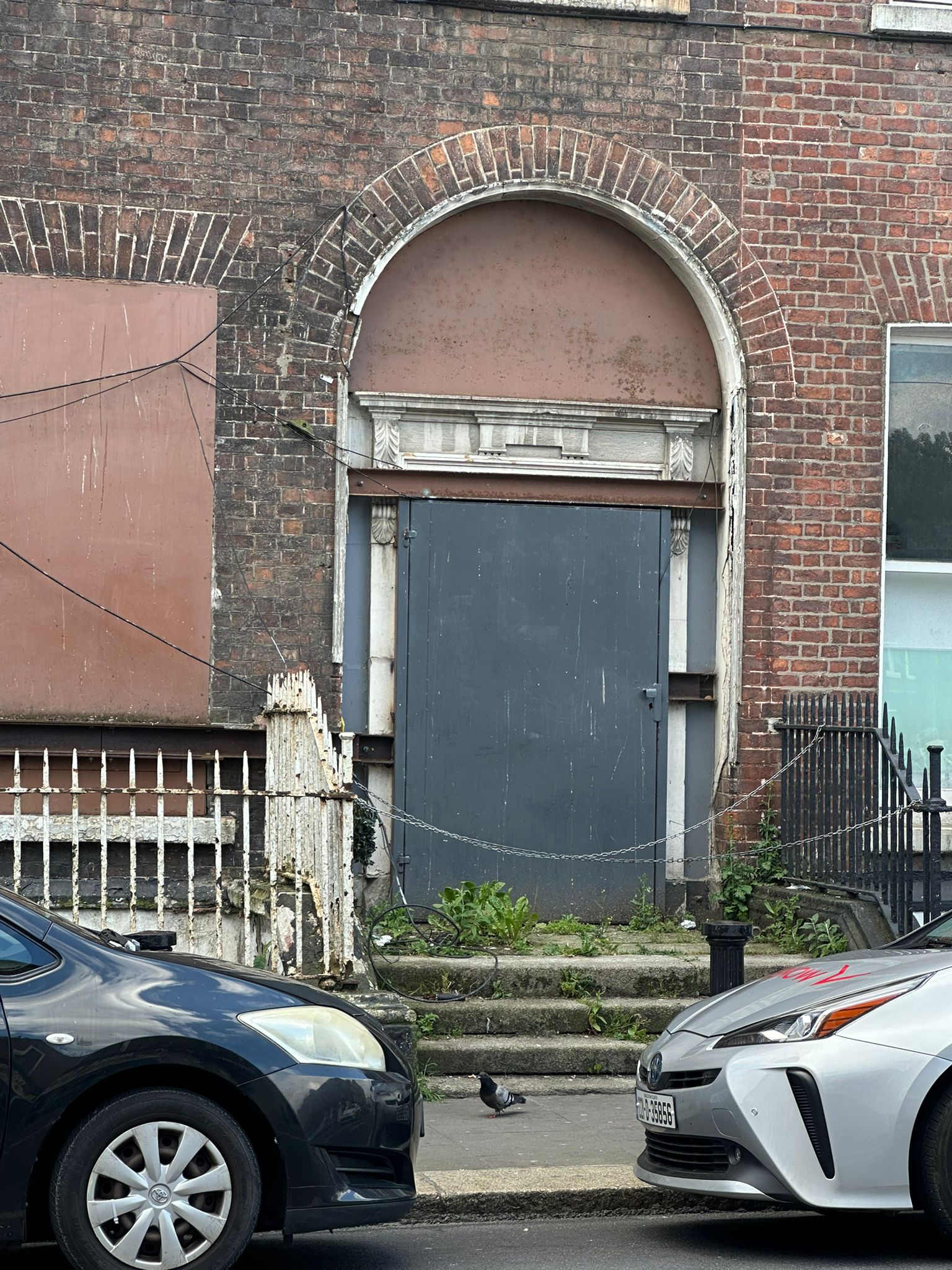
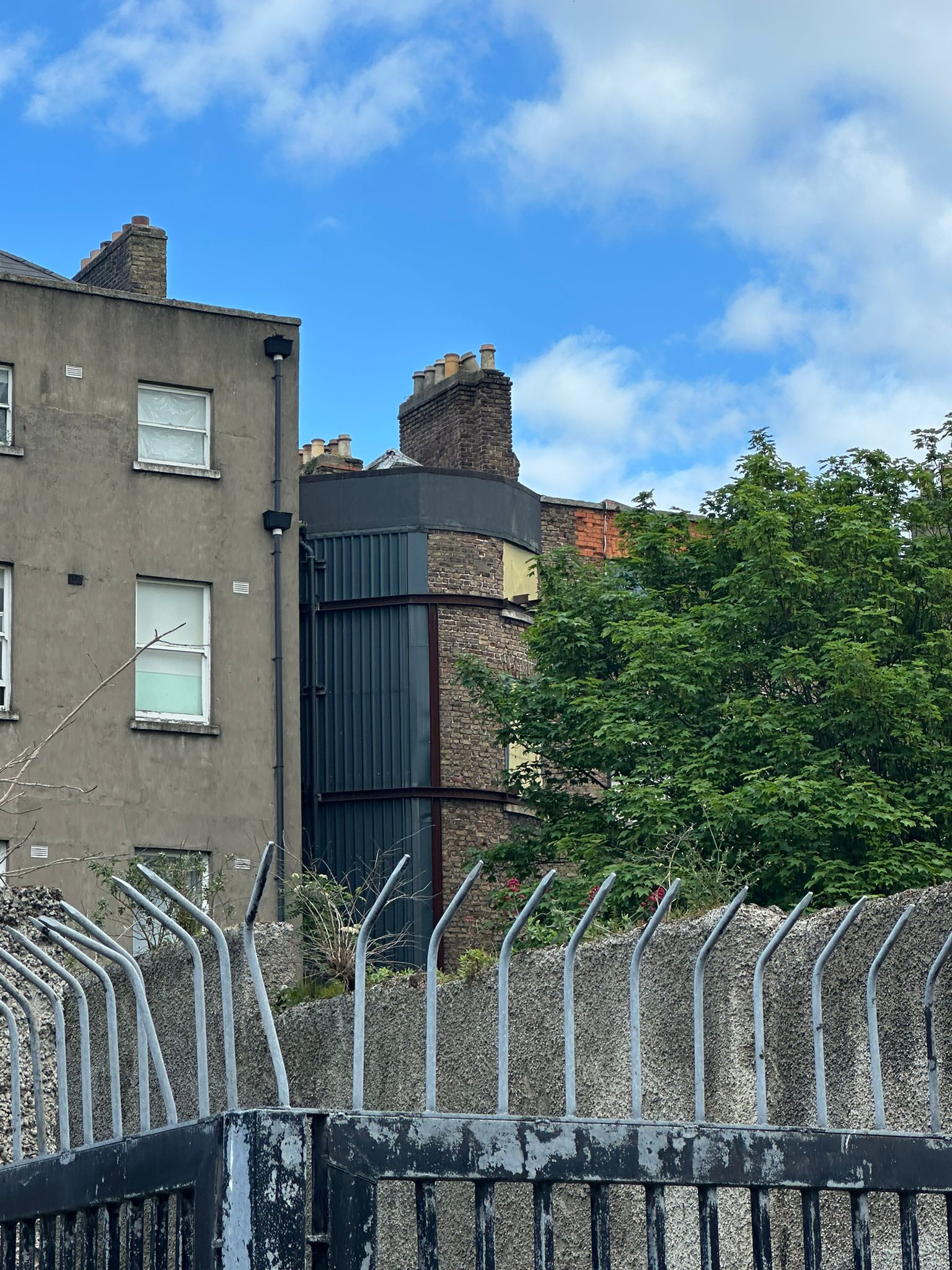
Notes: In an advanced state of decay after being left vacant in the 1990's. The original timber sash windows were wrapped with metal panes and supported by horizontal steel beams in 2015 as a stabilisation effort after the building's rear wall partially collapsed. The structure is listed on the National Inventory of Architectural Heritage. Despite its deep connections to Irish history and heritage, there is no relevant signage on site, and no. 30 Frederick Street North has been left to rot for over thirty years. Four doors down, the vacant no. 34 Frederick Street North was occupied and illegally evicted during the 'Take Back the City' protests in 2018 (Fitzgerald).
Past use: 30 Frederick Street North was constructed as a domestic residence circa 1805. By the end of that century, no. 30 - along with a number of nearby buildings - operated as An Stad, a tobacco shop, restaurant, "guesthouse and meeting place for Irish language enthusiasts and nationalists established by Cathal McGarvey" ("An Stad," Buildings of Ireland). In its heyday, the site boasted attendance by figures such as James Joyce, Michael Cusack, Oliver St. John Gogarty, Michael Collins, and John MacBride. After McGarvey sold the building in 1905, the mission of An Stad as a social space for literary Gaelic Revivalists and Irish Republicans alike was continued by Maire Gleeson, a member of Cumann na mBan who oversaw no. 30 until around the 1940s (Fallon). In 1938, members of the Irish Republican Army left An Stad, walked to O'Connell Street, and aimed to blow up Nelson's Pillar, before abandoning the plot for reasons unknown (Fallon). The multiplicity of the site's uses reflects the complexity and interrelatedness of late-nineteenth-early-twentieth-century Dublin's political, literary, and social landscapes.
Future use: A compulsory purchase order for the property by Dublin City Council was granted in 2024. There are no active planning permissions for the site.
Architectural significance: Terraced, three-bay four-storey-over-basement red-brick Georgian residence. Period features like sash windows and a carved doorframe remain in situ but are actively decaying due to neglect of the site.
Works cited:
Donal Fallon. 'An Stad, North Frederick Street.' Wordpress. Come Here to Me, 26 Mar. 2015, https://comeheretome.com/2015/03/26/an-stad-north-frederick-street/.
Fitzgerald, Cormac. 'Plans to Redevelop Property at Centre of Controversial "Take Back the City" Eviction into New Home.' The Journal, 20 Nov. 2019, https://www.thejournal.ie/take-back-the-city-eviction-frederick-street-4899699-Nov2019/.
National Built Heritage Service. 'An Stad, 30 Frederick Street North, Dublin 1, DUBLIN.' Buildings of Ireland, 21 Sept. 2011, https://www.buildingsofireland.ie/buildings-search/building/50010896/an-stad-30-frederick-street-north-dublin-1-dublin.